
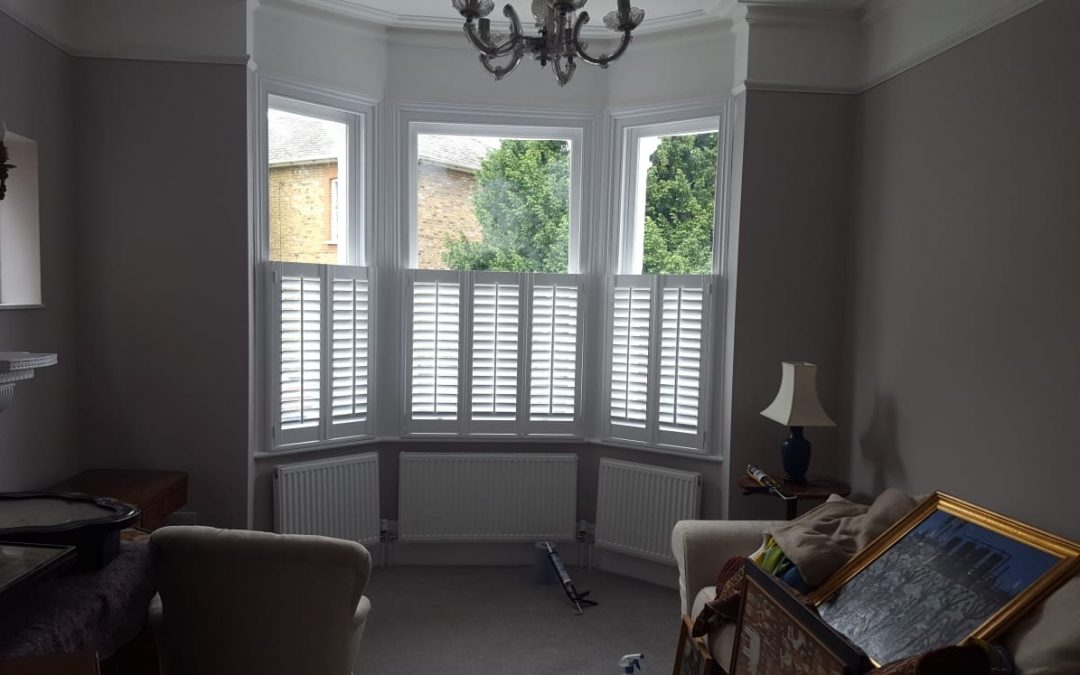
Old homes have character. They also have quirks. Walls that lean slightly. Window frames that are not quite square. Floors that slope in ways you do not notice until you place a marble on them.
These quirks are part of what makes older properties feel lived-in and interesting. But they also create challenges when fitting shutters.
At Shutters Sale, a good portion of our work is in period properties, Victorian terraces, Edwardian semis, and cottages that have been standing for a century or more. We have learned a lot about what these homes demand when it comes to measuring and installation.
This article shares some of that experience and offers an honest look at the DIY question.
The Appeal of Doing It Yourself
We understand why people consider DIY. Fitting your own shutters feels satisfying. You control the schedule. And there’s money to save, at least on paper.
For newer homes with standard windows, DIY can work fine. Measure the width, measure the height, and order accordingly. The frames are likely true. The walls are probably plumb. Everything lines up as expected.
Older homes are different.
What Makes Older Homes Tricky
Houses settle over time. Wood frames expand and contract across seasons and years. Walls built before modern standards don’t always meet floors at perfect right angles.
None of this means anything is wrong with the house. It means the house has been lived in a bit.
But it does affect how shutters fit.
A window that looks rectangular might be 6mm wider at the top than at the bottom. A reveal that appears flat might bow slightly in the middle. The frame on one side might sit a few millimetres proud of the wall, while the other side sits flush.
These variations are small. You probably don’t notice them day to day. But shutters are precise objects. A few millimetres matter.

What DIY Measuring Often Misses
When people measure their own windows, they typically take two numbers: width and height. Sometimes they measure in a couple of spots and average them out.
For a newer property, this approach is usually fine.
For an older property, it misses quite a lot.
Start with reveal depth. Shutters mounted inside the window recess need enough space to fold back properly. Too shallow, and the louvres will not open fully. Older windows often have deeper reveals than modern ones, which sounds like good news, but that depth can vary from one side of the window to the other.
Squareness is easy to overlook. Professional measurers check diagonals. If the two diagonal measurements differ, the window is not square. Shutters made for a perfect rectangle will not sit right in a parallelogram.
Obstructions catch people out as well. Window locks, handles, trickle vents. In older homes, these are sometimes fitted in unusual positions. A measurement that ignores them leads to shutters that cannot close properly.
And then there is the surrounding surface. Crumbling plaster, flaking paint, old filler that has come loose. All of this affects how the shutter frame gets fixed in place.
A Story From a Recent Job
We measured a Victorian terrace in south London a few months back. The homeowner had already attempted to measure themselves. Sensible person, good with tools, had done plenty of DIY projects before.
Their measurements showed the bedroom window at 1,205mm wide by 1,410mm high.
Our measurements showed the width ranging from 1,198mm at the bottom to 1,214mm at the top. The height varied from 1,407mm on the left to 1,418mm on the right.
Shutters made to the homeowner’s measurements would have had a visible gap on one side and wouldn’t have closed flush at the top.
This isn’t a criticism of their measuring. They used a decent tape measure and took care. But they measured twice in the middle rather than multiple times across the whole opening.
The house had settled unevenly over 120 years. Completely normal. Completely invisible until you start measuring carefully.
What Professional Measuring Involves
When we measure a window at Shutters Sale, we check more than dimensions.
We measure width at three points: top, middle, and bottom. We measure height at three points: left, centre, and right. We note the smallest measurements because the shutters need to fit the tightest point.
We measure and reveal depth at multiple spots to check for bowing or unevenness.
We check diagonals to assess squareness. If the frame is significantly out of square, we discuss options with the homeowner. Sometimes a small frame around the shutters helps. Sometimes an outside mount works better than an inside mount.
We note the positions of handles, stays, and any other hardware that might interfere with shutter operation.
We assess the wall and frame surfaces. Solid brick behind plaster fixes differently than lath and lime or hollow stud walls.
This process takes longer than a quick tape measure job. For a single window, maybe ten minutes. For a whole house, an hour or more.
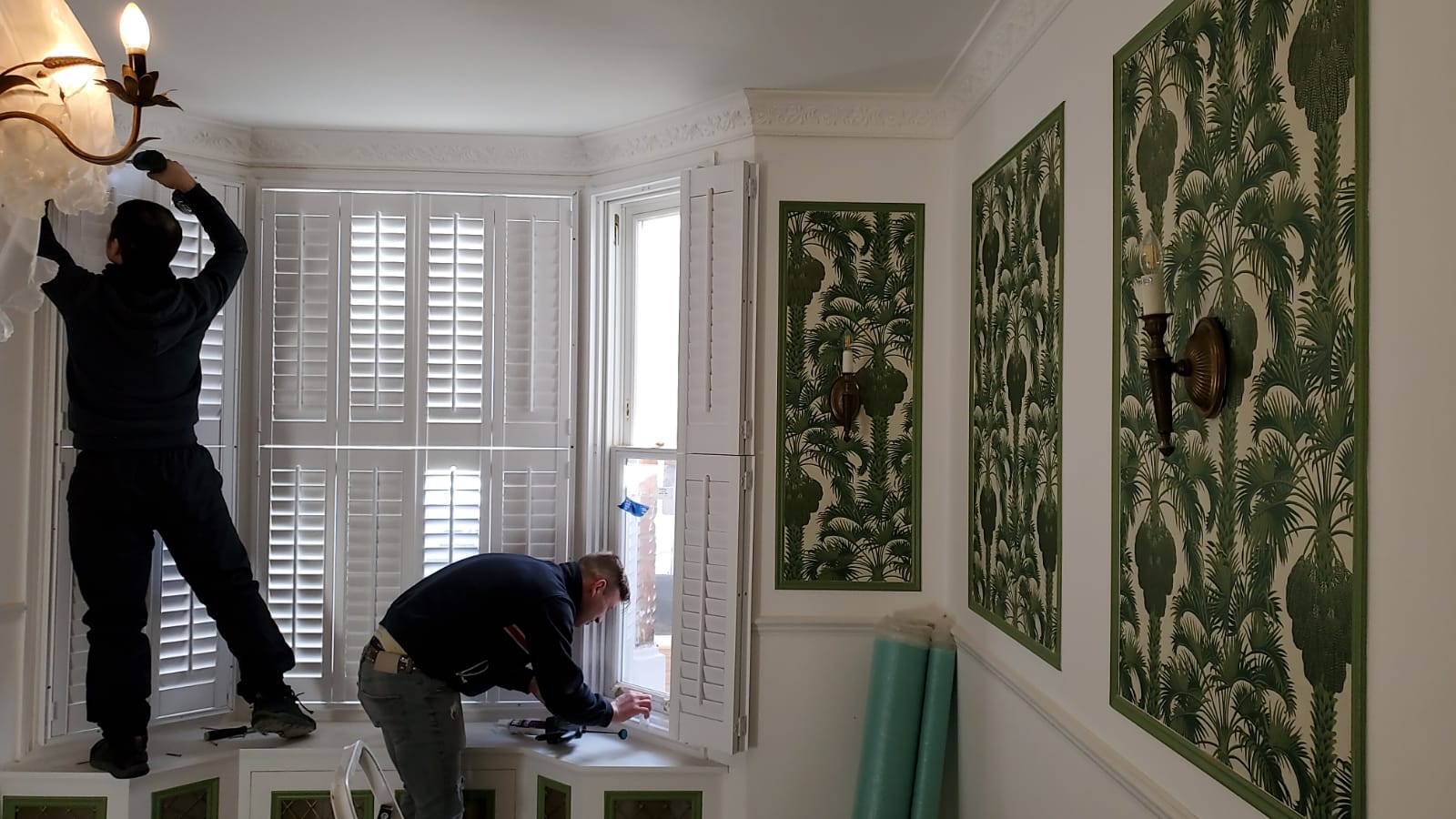
When DIY Makes Sense
For certain situations, DIY is perfectly reasonable.
If your home was built in the last twenty years and has standard UPVC windows, measurements are more likely to be accurate and installation is more straightforward.
If you’re handy with tools and have experience with similar projects, you understand how small errors compound and how to avoid them.
If the shutters you’re fitting are adjustable or forgiving in their sizing, there’s more margin for slight measurement variations.
If saving money matters more than saving time and potential hassle, the trade-off might work in your favour.
When Professional Help Makes Sense
For older properties, professional measuring and installation earns its cost.
Houses built before the 1970s often have quirks that catch out DIY measurers. The older the property, the more likely things have shifted over time.
Listed buildings or properties in conservation areas sometimes have specific requirements about fixtures. Professionals working in these areas know what’s allowed and what isn’t.
Large or complex jobs with many windows benefit from consistency. One measurer doing every window means one approach throughout.
Unusual window shapes need expertise. Arched tops, angled corners, bay configurations. These require careful calculation that goes beyond basic measuring.
If you’re spending good money on quality shutters, professional installation protects that investment.
How We Approach Older Homes at Shutters Sale
We like older homes. They’re more interesting to work in.
But we also know they require more care. Our measuring process for a Victorian terrace differs from our process for a new build. We take more measurements. We spend more time assessing conditions. We ask more questions about the property’s history.
Sometimes we find things during measurement that change the approach. A reveal that’s too shallow for inside mounting. A frame that’s too damaged to fix into. A wall that needs work before shutters can go up.
We’d rather discover these things during a measuring visit than after manufacturing. Honesty at the start saves everyone time and frustration later.
Our installation teams have fitted shutters in all sorts of properties. Georgian townhouses. Edwardian semis. 1930s bays. Post-war prefabs. Each type has its patterns and its surprises.
Making Your Decision
There’s no single right answer about DIY versus professional installation. It depends on your home, your skills, your tolerance for risk, and your budget.
Here’s a simple way to think about it.
Look at your windows. Do the frames seem straight and square? Are the reveals clean and consistent? Was the house built recently enough that settlement isn’t a concern?
If yes to all of those, DIY is worth considering.
If no to any of them, professional measuring starts to look more sensible.
You can also split the difference. Some customers ask us to measure professionally but then install themselves. That captures the precision benefit while reducing cost.
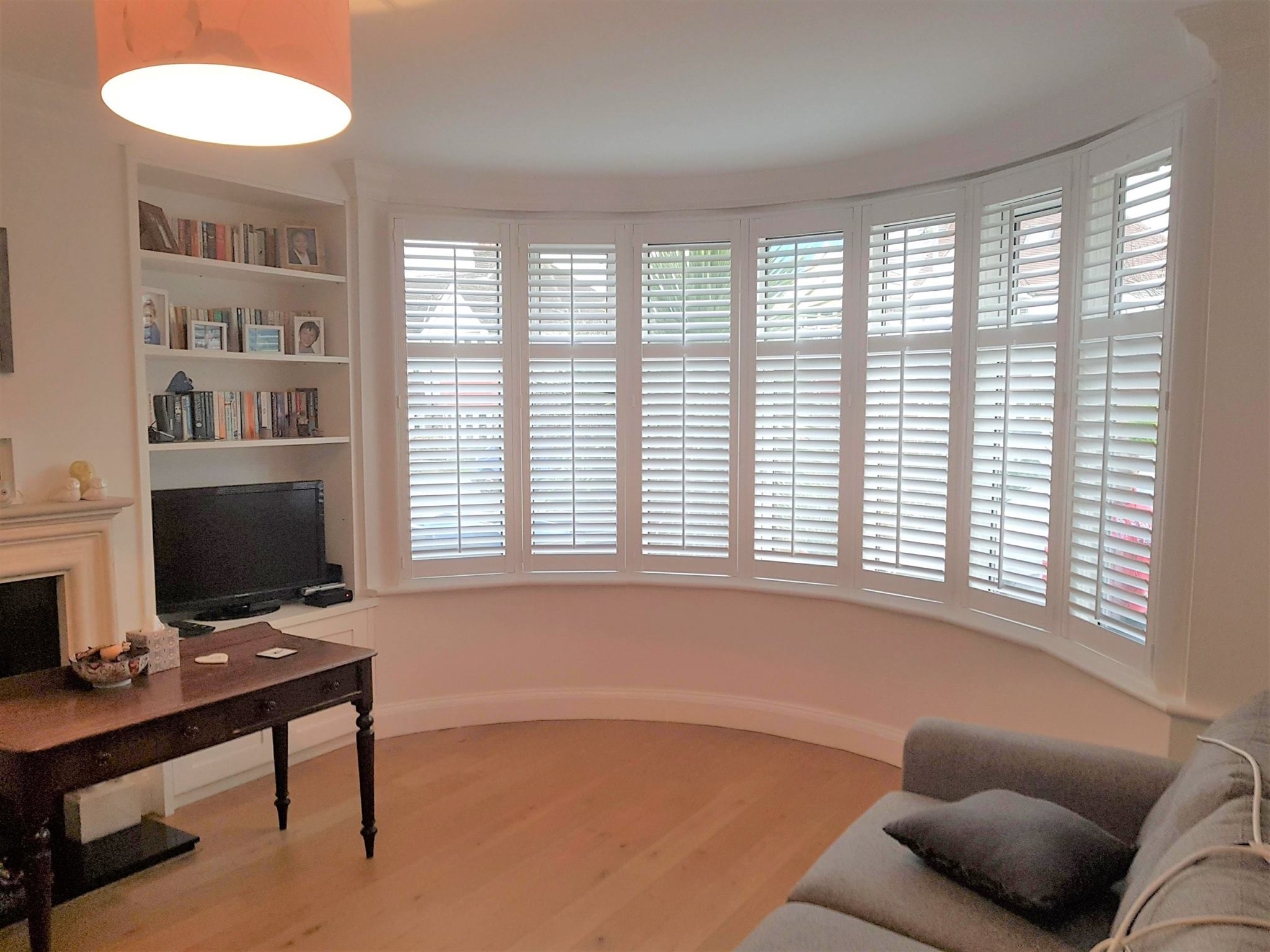
Getting In Touch
If you’re thinking about shutters for an older property and want to talk through options, we’re happy to help.
We can do a measuring visit and discuss what we find.